5 science-backed ways to boost your mood
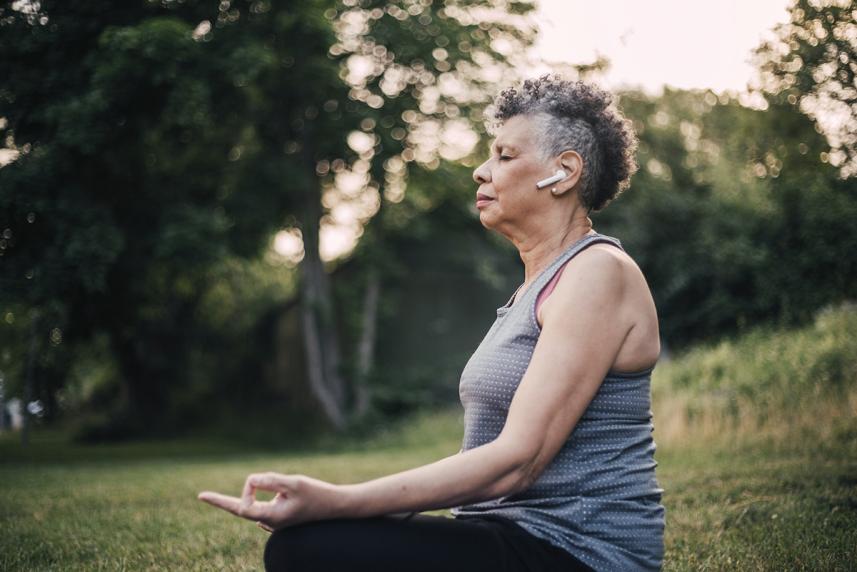
When you’re feeling low, there are things you can do to feel better fast — and they’re easy to incorporate into your day.
The information in this article is for educational purposes only and is not intended to replace medical advice from your doctor.
It’s common to feel a little down from time to time. Especially when you’re tuned in to the 24/7 news cycle and the news isn’t exactly … uplifting.
But there’s good news too. Scientists are always studying our minds and moods and finding new ways that are proven to make you feel better.
Many of these techniques are low-effort and easy to achieve. Here are five to try when you need a boost.
1. Breathe slowly
You might wonder, “How can breathing change things? I do it all the time.” That's true. The difference here is how you breathe. A few slow, intentional breaths can brighten your mood.
Why it works: Your nervous system serves as a control center for your moods. And your breath activates different parts of your nervous system.
You’ve probably heard about the fight-or-flight response. It’s the part of your nervous system that gets activated when you think you’re in danger or feel overly anxious. It springs into action to protect you from threats. Inhaling also turns on this response.
But when you exhale, the rest-and-digest part of your nervous system kicks in. When that happens, your heart rate slows.
That’s why purposeful breathing is so helpful. Those longer exhales rewire the brain, helping you feel more serene.
In fact, the more thoroughly and slowly you exhale, the calmer you’ll feel, says Charryse Johnson, Ph.D., a psychotherapist and licensed clinical mental health counselor based in Charlotte, North Carolina. Those long, steady breaths tell your brain everything is all right.
Try it: Lie on your back in a comfortable position. Place your hands on your belly or ribs, with your elbows supported. Inhale comfortably, allowing your torso to expand into your hands. Pause. Exhale as slowly as you can — for longer than you inhaled. It might be easiest to count how long you inhale, and then double that count on your exhalations.
2. Meditate
Meditation is the practice of nonjudgmental awareness. That might sound confusing. It really just means setting aside uninterrupted time to focus your attention to help calm the mind.
Countless studies have shown the benefits of meditation. It can reduce anxiety, help you sleep, and increase your ability to deal with everyday challenges. These things help improve your perspective and help you feel more emotionally balanced.
Why it works: “Meditation alters regions of the brain linked with depression,” Johnson explains. “A daily meditation practice can help manage the stressors and factors that can trigger depression.”
Anxiety and stress are common triggers for continuous negative thinking, which is called rumination. When you feel low, the parts of your brain that are associated with worry and fear go into overdrive. Meditation helps to disrupt that anxiety before it leads to depression.
If you’re worried you may be depressed, you may be eligible for a screening as part of a complete in-home Health and Well-being Assessment — at no additional cost. Call Matrix Medical Network at 855-204-1752 (TTY: 711) to learn more. (Weekdays: 8 a.m. to 11 p.m. ET; Saturday: 9 a.m. to 5 p.m. ET)
There are many types of meditation. Some encourage you to focus on one thing: a mantra, for example, or a sound, word, or phrase. Others encourage you to observe certain sensations or the ebb and flow of your mind. If one type doesn’t work for you, don’t get discouraged. Another might be a better fit.
Try it: Find a quiet place to sit still or lie down for 10 minutes. Settle yourself with a few complete breaths. Pick two words. It can be as simple as “I am.” With each inhale, mentally recite the word “I” to yourself. With each exhale, mentally recite the word “am” to yourself.
3. Try mindfulness
Meditation is actually a form of mindfulness. General mindfulness is the act of being present as you go through your day-to-day activities. It means being anchored in the here and now.
Research shows that your mood tends to take a dive when you’re not paying attention to what’s happening in real time. Being mindful can help you feel more connected to yourself and the world.
Why it works: “People who are less present in the moment tend to be less happy,” says Inna Khazan, a Boston-based licensed clinical psychologist and author of Biofeedback and Mindfulness in Everyday Life: Practical Solutions for Improving Your Health and Performance.
Let’s say you’re washing dishes, but you don’t enjoy washing dishes. So you start imagining a beautiful vacation. “You’d think that would be a good thing,” Khazan says. “But research actually shows that it’s not.”
Our minds wander almost 50% of the time, Khazan says. “The more the mind wanders, the less happy we are,” she says. This is where mindfulness comes in. When you focus on the moment — what you see, hear, and feel — you are actually training the brain to stop ruminating on negative thoughts.
Don’t worry about not being mindful 24/7. “There is no requirement for 100% presence — that’s not necessary, and it’s not realistic,” Khazan says. “Just being a bit more present in daily life helps your mood.” Plus, once you have practiced mindfulness for a while, you can use it as a tool when you need to break a cycle of negative thoughts.
Try it: The next time you shower, pay complete attention to the process. Notice the sound of the water and how the soap feels on your skin. Completely immerse yourself in what’s happening as you bathe — instead of, say, thinking about your day.

A Health and Well-being Assessment supports your regular care — at no additional cost
Click below to get started.
4. Get active
Many studies and experts have proven that physical activity makes us feel good. Your body is made to move. Exercise includes lots of things, not just working out at the gym or with dumbbells. Chasing your kids or grandkids and vacuuming count too.
Why it works: “We need exercise,” Khazan says. “Lack of exercise is often described as a depressant in and of itself.”
After physical activity, people experience lower levels of stress hormones, according to the American Psychological Association. Exercise also regulates your appetite and helps you sleep more soundly. Both of these can lift your spirit.
Try it: Do something that gets you up and going. Take a walk, rearrange furniture, lift weights, or finish some yard work. Anything where you’re physically moving can work.
5. Prioritize quality sleep
Nearly 1 in 3 adults in the United States report not getting enough quality sleep, according to information from the Centers for Disease Control and Prevention. And a lack of sleep is associated with a negative mood. You can feel anger, frustration, irritability, and sadness.
Sleep is the most basic thing you can do to boost your mood. A full night of sleep will help you be a more contented version of yourself. Good sleep also helps maintain your overall health.
Why it works: All living beings sleep in order to recharge and renew. It’s especially important for brain health.
Most people need seven to nine hours of sleep a night. Poor sleep affects our ability to pay attention, learn, and remember. When you don’t get enough sleep, you are less able to deal with stress — and that can lead to a lower mood.
Plus, lack of sleep leaves your body physically tired. This in itself can make you grumpy — just like it makes tired toddlers grumpy.
Try it: The key is really to make sleep a priority. If you tend to get fewer than seven to nine hours a night, try to get just a little more. Work on building up how much sleep you get week by week.
It’s also important to limit distractions. Make sure your room is dark and cool. And put down devices, such as your smartphone, an hour or so before bed. It’s also a good idea to leave them face down while you’re sleeping. That way, you won’t see any notifications that light up the screen.
When you’re feeling low, remember not to blame yourself. It’s normal to go through down periods — it happens to everyone. Treat yourself with kindness. And focus on these simple lifestyle tips so you can feel calmer, sooner.
See our sources:
Take a deep breath: American Physiological Society
Meditation and mindfulness: National Center for Complementary and Integrative Health
Mindfulness meditation: American Psychological Association
Health benefits of physical activity: Centers for Disease Control and Prevention
Working out boosts brain health: American Psychological Association
Sleep statistics: Centers for Disease Control and Prevention
Cited sources were last reviewed on 5/2/2025.
Y0040_GHHMGSWEN_C