Are your medications increasing your fall risk?
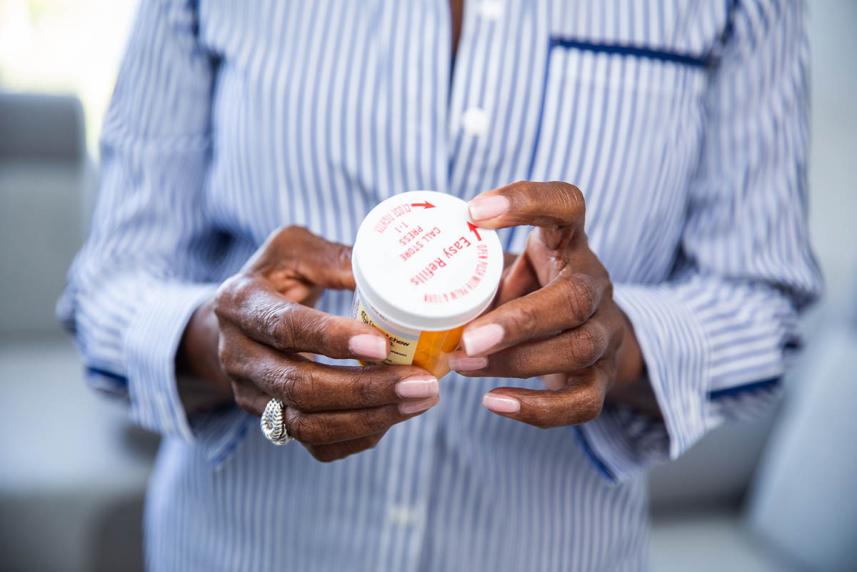
If you’re taking several prescription medications, there’s a chance they could interact and make you less steady on your feet. Here’s what to do.
The information in this article is for educational purposes only and is not intended to replace medical advice from your doctor.
When your doctor prescribes you a new medication, they’re doing it not only to treat a health problem but also to make you feel better. But sometimes that’s not what happens, especially with older adults.
More than 4 in 10 older adults take five or more prescription drugs every day, according to data from the Lown Institute. And sometimes those drugs don’t interact well with one another. That’s where side effects can make you feel unstable.
Here’s the truth: Side effects are common. Almost all prescription — and even some over-the-counter (OTC) — medications can cause side effects, states the National Institute on Aging (NIA). Most are mild, such as a headache or constipation.
But when it comes to side effects in adults ages 65 and up, things can get serious quickly, the NIA adds. Other common side effects include dizziness or drowsiness. And if you’re not steady on your feet, it could lead to a fall.
If you think you’re experiencing side effects from any of your medications — or have fallen because of them — talk to your doctor. (Don’t stop taking your medicine without consulting your doctor first.) They may be able to switch you to a new prescription or even find ways to lessen the side effects of your medications.
Here are some common prescription and OTC medications that can put you at risk of falling. (For more information about each medication and its side effects, please see “See our sources,” at the end of this article.)
Have questions about the medications you’re taking? A Health and Well-being Assessment is a great time to get answers from a licensed clinician — plus, it’s part of your Humana plan. Call Matrix Medical Network at 855-204-1752 (TTY: 711) or schedule online. (Weekdays: 8 a.m. to 11 p.m. ET; Saturday: 9 a.m. to 5 p.m. ET)
12 medications that can increase your risk of falling
1. Anticholinergics
Prescription or OTC: prescription
Used to treat: chronic obstructive pulmonary disease (COPD), overactive bladder, gastrointestinal disorders, asthma, involuntary muscle movements
Fall risk/side effects: drowsiness (with long-term use)
Common anticholinergics: trihexyphenidyl, amitriptyline
2. Antidepressants
Prescription or OTC: prescription
Used to treat: anxiety, depression
Fall risk/side effects: low blood pressure (when standing after sitting/lying down)
Common antidepressants: sertraline, citalopram, duloxetine, venlafaxine, bupropion, mirtazapine
3. Antihistamines
Prescription or OTC: OTC
Used to treat: colds, allergies
Fall risk/side effects: drowsiness, blurred vision
Common antihistamines: diphenhydramine (Benadryl), fexofenadine (Allegra), cetirizine (Zyrtec). You may also find these ingredients in any OTC sleep aids labeled “PM.”
4. Antipsychotics
Prescription or OTC: prescription
Used to treat: bipolar disorder, schizophrenia
Fall risk/side effects: agitation, constipation, dizziness, dry mouth, sedation, weight gain
Common antipsychotics: aripiprazole, clozapine, olanzapine, paliperidone, and risperidone, among others
5. Anxiety and insomnia medications
Prescription or OTC: prescription
Used to treat: anxiety, insomnia, seizures
Fall risk/side effects: dizziness, drowsiness
Common anxiety and insomnia meds: alprazolam (Xanax), diazepam (Valium), zolpidem (Ambien)
6. Blood pressure medications
Prescription or OTC: prescription
Used to treat: high blood pressure
Fall risk/side effects: dizziness
Common blood pressure meds: ACE inhibitors (benazepril, lisinopril), alpha-blockers (doxazosin, prazosin), beta-blockers (atenolol, labetalol)
7. Diabetes medication
Prescription or OTC: prescription
Used to treat: diabetes
Fall risk/side effects: dizziness, fainting
Common diabetes meds: biguanides (metformin), meglitinides (repaglinide, nateglinide)
8. Diuretics (water pills)
Prescription or OTC: prescription
Used to treat: high blood pressure
Fall risk/side effects: dizziness, headaches, impotence, muscle cramps, joint disorders (e.g., gout)
Common diuretics: thiazide (chlorthalidone, indapamide), loop (furosemide, torsemide), potassium-sparing (eplerenone, spironolactone)

A Health and Well-being Assessment supports your regular care — at no additional cost
Click below to get started.
9. Epilepsy and seizure medications
Prescription or OTC: prescription
Used to treat: anxiety, mood, seizure risk
Fall risk/side effects: drowsiness
Common epilepsy and seizure meds: carbamazepine, clonazepam, diazepam, lorazepam
10. Muscle relaxants
Prescription or OTC: prescription
Used to treat: back pain, muscle spasms
Fall risk/side effects: dizziness, drowsiness, low blood pressure, muscle weakness
Common muscle relaxants: carisoprodol, cyclobenzaprine, diazepam, methocarbamol
11. Narcotic pain medications
Prescription or OTC: prescription
Used to treat: chronic pain
Fall risk/side effects: dizziness, sedation
Common narcotic pain meds: codeine, morphine, oxycodone
12. Nonsteroidal anti-inflammatory drugs (NSAIDs)
Prescription or OTC: OTC (most of the time)
Used to treat: fever reduction, inflammation, pain, blood clots
Fall risk/side effects: dizziness, drowsiness
Common NSAIDs: ibuprofen, naproxen
What you can do to lessen your chance of falls from medication
If you’re taking one of the medications listed above, ask yourself:
- Have I experienced side effects?
- Have any of them led to me falling or feeling not like myself?
If you answered yes to either of these questions, contact your doctor as soon as possible.
At your appointment, you’ll want to bring a list of the other medications you’re taking — even OTC drugs or supplements, as they may be creating a harmful interaction.
If you’re dealing with interactions between prescription medications, your doctor may be able to help you find alternatives. Or they can advise you about lifestyle changes, such as diet and exercise, that can help reduce the negative effects of the drugs you’re taking.
Your Health and Well-being Assessment is another opportunity to review all your medications with a clinician. This annual assessment is available at no additional cost to you — and it gives you plenty of time to get all your questions answered.
Even if you’re not taking one of the above drugs, there are tweaks you can make to your day-to-day lifestyle that can help you avoid falls. These include:
- Addressing leg or foot injuries promptly. If you stub your toe and it stays black and blue for weeks, it’s probably a good idea to get it checked out by a health professional, per information from the Cleveland Clinic. Abnormal issues with your legs and/or feet could also be a sign of diabetic neuropathy, according to the American Diabetes Association (ADA).
- Drinking more water. Being dehydrated can make you feel dizzy, according to a report in the Mayo Clinic Proceedings. It’s a good idea to drink at least four to six cups of water a day, notes Harvard Health Publishing.
- Exercising regularly. Strengthening your muscles and doing balance exercises can go a long way toward helping you avoid a fall, states the NIA and ADA.
- Maintaining a healthy weight. Being underweight increases the risk of bone loss and broken bones if you do fall, the NIA says.
- Maintaining stable blood sugar levels. You can do this by eating balanced meals, the ADA states.
The bottom line: If you’re 65 or older and taking multiple medications, it’s worth keeping tabs on yourself. Are you feeling woozy after taking a certain medication? Are you unsure about how the different medications you’re taking might interact? Whatever the case may be, it’s always a good idea to consult your doctor. They will be able to keep you in good health — and on your feet.
See our sources:
General information about medications, falls, and tips to help keep older adults safe:
Medication overload and older Americans: Lown Institute
Medication and older adults: National Institute on Aging
Taking medicines safely as you age: National Institute on Aging
Medications linked to falls: Centers for Disease Control and Prevention
Causes of falls and how to prevent them: National Institute on Aging
Falls and diabetes: American Diabetes Association
Falls and dehydration: Mayo Clinic Proceedings: Innovations, Quality & Outcomes
Finding and learning about side effects: U.S. Food and Drug Administration
Balance and avoiding falls: American Diabetes Association
Stubbed toes and when to see a doctor: Cleveland Clinic
Diabetic neuropathy and falls: Journal of Diabetes Science and Technology
How much water should you drink? Harvard Health Publishing
Falls and fractures in older adults, and tips to prevent them: National Institute on Aging
Information about the 12 medications:
1. Anticholinergics
Anticholinergic medications: National Library of Medicine: StatPearls
Amitriptyline’s anticholinergic adverse drug reactions: PLoS One
2. Antidepressants
Antidepressants: National Library of Medicine: MedlinePlus
Antidepressants: National Library of Medicine: StatPearls
3. Antihistamines
Antihistamines for allergies: National Library of Medicine: MedlinePlus
Diphenhydramine: National Library of Medicine: MedlinePlus
4. Antipsychotics
Neuroleptic medications: National Library of Medicine: StatPearls
5. Anxiety and insomnia medications
What are prescription CNS depressants? National Institute on Drug Abuse
6. Blood pressure medications
Types of blood pressure medications: American Heart Association
7. Diabetes medication
Diabetes medicines: U.S. Food and Drug Administration
Oral hypoglycemic drugs: Pharmaceuticals
8. Diuretics (water pills)
Association between diuretics and falls: Geriatric Nursing
Diuretic use and risk of falls: Journal of the American Geriatric Society
9. Epilepsy and seizure medications
Summary of anti-seizure medications: Epilepsy Foundation
10. Muscle relaxants
Methocarbamol: National Library of Medicine: StatPearls
11. Narcotic pain medications
Commonly used drugs charts for the potential for misuse or addiction: National Institute on Drug Abuse
12. Nonsteroidal anti-inflammatory drugs (NSAIDs)
Naproxen: National Library of Medicine: MedlinePlus
Ibuprofen: National Library of Medicine: MedlinePlus
Cited sources were last reviewed on 10/9/25
Y0040_GHHMS5CEN_C